
Translate the message, share the structure
Native language files let a page keep different titles and bodies. Composer deliberately manages one common logical order of modular sections across supported parent variants. The translated wording is not an alternative structure store.
Observe the decision
Before moving a section, existing effective collections must agree. A conflicting custom order is refused rather than silently repaired. Adding a section creates only its default content file; translate it explicitly in the native authoring workflow. Keep media credits with the page even when the caption changes.
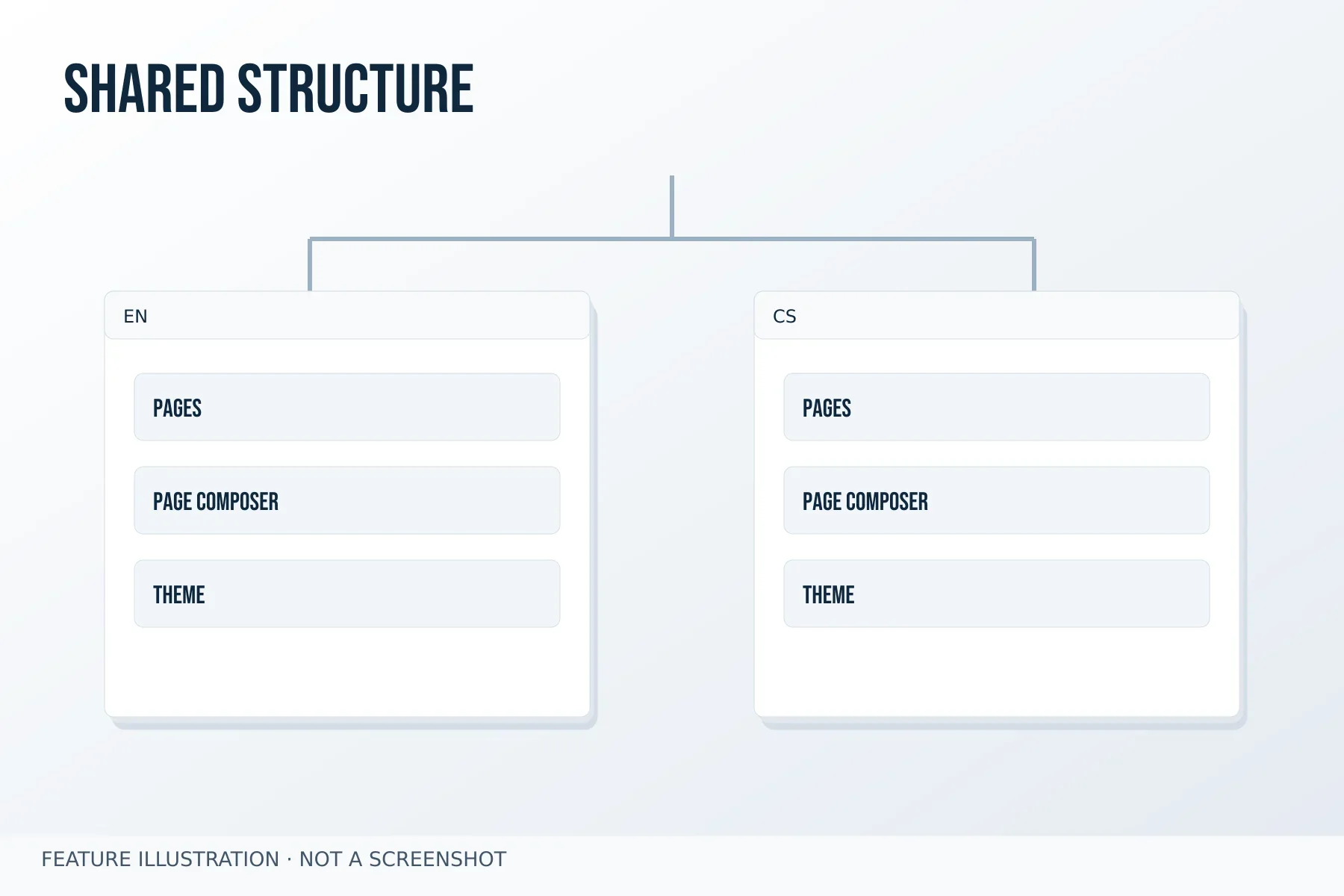
Image credit: Gravister · MIT
Check both language variants before reordering
- Open the existing EN and CS variants of one modular parent and compare the effective collection order.
- Translate a section's title and body in its native language file, keeping its identifier and shared position.
- If the existing orders agree, move the section once in Composer and inspect both languages. If Composer reports a conflict, stop and review the intended editorial structure instead of forcing a rewrite.
A launch is a starting point, not a synchronization job · All articles
Separate the shared decision from the translation
A translated landing page often needs different wording but the same sequence of arguments. Keep the section identifiers and collection structure aligned, then translate titles, paragraphs and captions in the native language files. A shorter Czech title is a content choice, not a reason to introduce a second structural ordering system. Existing parent variants are updated together by the Composer contract; missing translation files are not invented during an Add operation.
Before editing an older multilingual page, inspect any intentionally different collection configuration. Composer refuses conflicts rather than silently rewriting them. Decide whether the page should share the structure before attempting the mutation again. This protection is useful because a difference may represent an editorial decision, not damaged data. A safe tool cannot infer that decision from a filename alone.